Mid-sized food and beverage companies in the United States operate in a uniquely challenging space. They are larger than startups but lack the massive resources of global beverage manufacturers.
Yet many of these businesses continue to scale efficiently, compete with large beverage manufacturing companies, and adapt quickly to market changes. Their success is not accidental it is driven by smart operational decisions, digital transformation, and strategic use of technology such as ERP extranet development.
One clear takeaway from thriving food and beverage companies is their investment in centralized systems that streamline production, distribution, and compliance.
Many organizations have adopted customized ERP platforms, similar to the solutions highlighted in this real-world case study on ERP implementation for mid-sized FMCG companies, to gain visibility and control across departments.
1. Operational Efficiency Is a Competitive Advantage
Successful food and beverage companies understand that margins are tight and inefficiencies are costly. Whether they are beverage manufacturers or diversified food producers, streamlined operations are essential. Mid-sized beverage manufacturing companies often face challenges such as inventory mismanagement, inconsistent production schedules, and delayed order fulfillment.
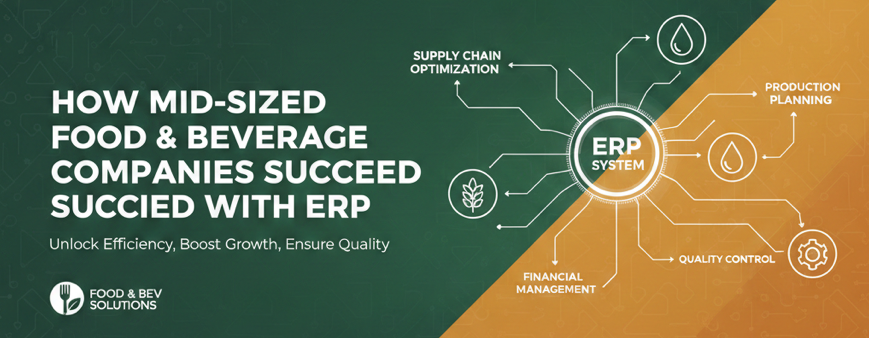
To overcome these issues, many companies implement ERP systems tailored specifically for food and beverage workflows. These platforms integrate procurement, production planning, quality control, warehousing, and finance into a single ecosystem. With ERP extranet development, businesses can also securely share real-time data with distributors, suppliers, and partners reducing delays and improving collaboration.
2. Data-Driven Decision Making Fuels Growth
Another key lesson from high-performing beverage companies is their reliance on data rather than intuition. Modern ERP systems allow food and beverage companies to analyze sales trends, forecast demand, and optimize inventory levels with precision.
For beverage manufacturers dealing with seasonal demand or fluctuating raw material costs, data insights help prevent overproduction and stock shortages. By leveraging real-time analytics, mid-sized companies can make faster decisions, respond to market changes, and scale operations without unnecessary risk.
3. Compliance and Traceability Are Non-Negotiable
Regulatory compliance is a critical concern for food and beverage companies in the U.S. From FDA regulations to labeling requirements and batch traceability, the margin for error is minimal. Successful beverage manufacturing companies prioritize systems that ensure full traceability across the supply chain.
ERP solutions designed for the food and beverage industry enable companies to track ingredients from suppliers to finished products. This capability not only supports compliance but also builds trust with customers and retailers. In the event of a recall, companies can act swiftly, minimizing financial and reputational damage.
4. Customization Beats One-Size-Fits-All Solutions
A common mistake among growing beverage companies is adopting generic software that fails to meet industry-specific needs. Successful mid-sized food and beverage companies invest in customized ERP extranet development that aligns with their unique processes.
For example, catering businesses and large-scale food service providers such as those using specialized systems like Al Naba Catering ERP require features like menu costing, bulk order management, and multi-location operations. Custom ERP platforms ensure that technology supports business goals rather than forcing companies to adapt to rigid systems.
5. Collaboration Across the Value Chain Matters
Modern food and beverage companies do not operate in isolation. They rely on a network of suppliers, logistics partners, distributors, and retailers. Successful companies use ERP extranets to enable secure collaboration across this ecosystem.
Beverage manufacturers, for instance, benefit from sharing production schedules with suppliers or inventory data with distributors. This transparency reduces miscommunication, improves delivery timelines, and strengthens long-term partnerships key factors for sustained growth in competitive U.S. markets.
6. Scalability Prepares Companies for the Future
Growth is a goal for every mid-sized food and beverage company, but growth without preparation can lead to chaos. Successful beverage manufacturing companies invest early in scalable ERP systems that can grow with the business.
Whether expanding to new regions, launching new product lines, or increasing production capacity, a flexible ERP platform ensures that systems do not become bottlenecks. Cloud-based ERP solutions also allow companies to add users, locations, and features without major infrastructure changes.
7. Technology Enables Customer-Centric Operations
At the core of every successful food and beverage company is a focus on customer satisfaction. ERP systems help businesses deliver consistent quality, meet delivery commitments, and respond quickly to customer needs.
From B2B beverage distributors to direct-to-consumer food brands, integrated systems improve order accuracy and service reliability. This operational excellence translates directly into stronger brand reputation and repeat business.
Final Thoughts
The success of mid-sized food and beverage companies in the United States offers valuable lessons for the entire industry. Strategic investment in ERP extranet development, industry-specific customization, and data-driven operations empowers businesses to compete with larger enterprises while maintaining agility.
As food and beverage manufacturers continue to face rising costs, regulatory demands, and evolving consumer expectations, adopting scalable and intelligent digital solutions will define long-term success.
Companies that align technology with industry expertise across diverse business verticals will be best positioned to innovate, grow, and lead the future of the food and beverage sector.