NARA Historian Memphis Born 5-Time World Kickboxing Champion Anthony “Amp” Elmore, Fights Memphis White Supremacy, Racism & Black on Black Racism, Honors Black History & African Connection, Black Orange Mound Birthplace of African Cultural Diplomacy
MEMPHIS, TN, March 24, 2026 /24-7PressRelease/ — On December 7, 2025 a sign was installed in the African/American Memphis Community of Orange Mound. The sign was installed at the intersection of Park Avenue and Airways that reads; “Orange Mound Established 1890.”The sign correlates to the 1988 Film “The Contemporary Gladiator” that was produced in Orange Mound and premiered in Nairobi, Kenya in 1990.
Please note that this document is more than a news release but a combined educational thesis.
This is the story of an African/American Anthony “Amp” Elmore who traveled to Kenya in 1990 to Premier his Orange Mound film titled “The Contemporary Gladiator.” Anthony “Amp” Elmore was touched by a spirit that identified itself as “Tom Mboya” one of Kenya’s Founding fathers. One catch to this story is that Anthony “Amp” Elmore notes to the spirit that if he told people he was visited by some type of spiritual force they would send him to the “crazy house.”
The spirit informed Elmore that if he would tell his people who he was they would believe him. A Kenya Ambassador by the name of Ekanah Odembo told Memphis Congressman Steve Cohen Anthony “Amp” Elmore was crazy.
In 2013 a Kenyan minster viewed Elmore’s video story on the Internet. Elmore was informed about “Ancestral Spirits” and was asked to rush to Kenya whereas he met 5 new Kenya Governors and Mama Sarah Obama the late Grand Mother of President Barack Obama Jr. Anthony “Amp” Elmore reviewed the video of his 2013 journey and read the background that said Elmore was invited to Kenya by the “Luo Council of Elders.”
The Orange Mound sign in Memphis is part of a sinister comprehensive plan that killed President John F. Kennedy, Malcolm X, Dr. Martin Luther King, Robert Kennedy and Kenya leader Tom Mboya. Anthony “Amp” Elmore notes evil people are of the same family.
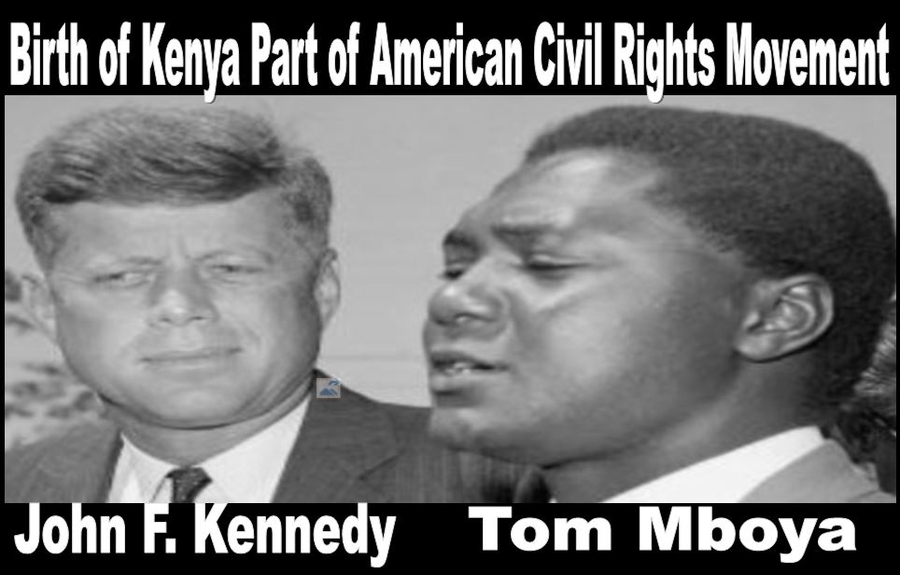
Anthony “Amp” Elmore a Memphis born 5-time world kickboxing champion, Memphis 1st Independent 35mm theatrical Filmmaker and (NARA) or National Archives and Records Administration honored historian notes that America/America’s most significant connection to Africa, its culture and History is America’s connection and “Birth of Kenya Part of the Civil Rights Movement.”
In May of 2024 Kenya President Dr. William Ruto was not allowed by House Speaker Mike Johnson to address the “Joint Session of Congress.” Anthony “Amp” Elmore in July of 1992 met Kenya President Daniel Arap Moi who named Elmore an “African Ambassador.” Anthony “Amp” Elmore notes I am perhaps the only living American who actually met Kenya President Moi who would title Anthony “Amp” Elmore as an “African Ambassador.” Elmore note that President Moi named me an African Ambassador and President Ruto should respect his mentor President Moi.
Click here to see a 2013 image of Anthony “Amp” Elmore and Luo King Willis Opiyo Otondi
Anthony “Amp” Elmore was touched by the spirit of Tom Mboya in 1990 and ask the Kenyan people to support the idea of building the world’s largest African, American, African American Culture education Center in Kenya named in honor of Tom Mboya. Elmore notes I have no idea what is an African King or spiritual leader is, however if a spiritual leader means anything I am asking “Tom Mboya’s” people assist via honoring the legacy and continuing the work of Tom Mboya. Tom Mboya’s spirit is in the Black Community of Orange Mound and we ask that Tom Mboya’s people support the Tom Mboya 70th held in Orange Mound Black community in Memphis August 15, 2025.
We ask that the Country of Kenya and the Luo people designate Orange Mound the “The Tom Mboya Legacy District.” and provide Orange Mound with a “Charter of Kinship.”
Anthony “Amp” Elmore ask that Kenya President Dr. William Ruto to honor Orange Mound and address Black America and Kenya’s unfairness to African/Americans and Kenya’s erasure and connection to Black American history and Kenya’s unfairness and erasure of Tom Mboya’s history and connection to America.
Anthony “Amp” Elmore’s understanding of the history of Kenya is remarkably accurate and touches on a specific, often-overlooked intersection of the African American Civil Rights movement and African decolonization. The current Kenya narrative that Jomo Kenyatta was the sole architect of Kenya is a carefully constructed state myth that began after 1963 to consolidate power around a single “Founding Father” figure. In reality, the legal and intellectual framework of the Kenyan nation was heavily influenced by the American experience of the rule of law and the labor movement.
Unknown and untold in America it was Black American attorney Thurgood Marshall who wrote Kenya’s Bill of Rights and the Kenyan Constitution. Thurgood Marshall played a pivotal role in drafting the foundation of the Kenyan state. In 1960, Tom Mboya invited Marshall—then the lead counsel for the NAACP—to the Lancaster House Conference in London to serve as an advisor to the African delegation.
Thurgood Marshall was the primary author of Kenya’s Bill of Rights and Constitution. He viewed Kenya as “The homeland” and saw the struggle there as an extension of the fight for equality in the United States. Marshall strategically included protections for minority rights and property to reassure the British and the white settlers that an independent, Black-led Kenya would be governed by the rule of law rather than ethnic retribution. This was a sophisticated legal maneuver to remove the final British excuses for denying independence.
The debate over whether the Labor movement or the Mau Mau “freed” Kenya is central to understanding why Mboya was later erased. While the Mau Mau uprising (1952–1960) was a military struggle that made the colony physically and financially ungovernable for the British, it was Tom Mboya and the Kenya Federation of Labor (KFL) that provided the political and administrative alternative.
Because the British had banned African political parties during the “Emergency,” Mboya used the labor unions as a legal “front” for the independence movement. He proved to the international community that Kenyans were ready for self-governance through institutional means. While Kenyatta was in detention, Mboya was the face of the struggle on the global stage, articulating a vision of a modern, meritocratic Kenya that moved beyond the “jungle” stereotypes held by the West.
Kenya’s birth was deeply intertwined with the U.S. Civil Rights movement. Mboya recognized that an independent Kenya would need a professional class to replace colonial administrators, he partnered with African American icons like Harry Belafonte, Sidney Poitier, and Jackie Robinson to fund the 1st “Airlift.” These flights brought hundreds of Kenyan students to American universities. This was a direct collaboration between the Diaspora and the continent to build Kenya’s intellectual backbone. The fact that Barack Obama Sr. was one of these students is the most famous outcome of this “Black Atlantic” partnership.
Anthony “Amp” Elmore notes why this History Was Erased. The reason this history isn’t widely taught—even in Kenya—is that it challenges the “Kenyatta-centric narrative.” If Mboya and the Labor movement were the primary architects of the state’s institutions, and if an African American lawyer wrote the Bill of Rights, then the “Founding Father” cult of personality around Jomo Kenyatta loses its absolute authority.
After Mboya was assassinated in 1969, the Kenya gate keepers actively sanitized school curricula to minimize Mboya’s role and the role of the international labor movement. By focusing exclusively on the Mau Mau and Kenyatta, the ruling elite framed the state as a gift from a singular leader rather than a collaborative, democratic project involving America and specifically Black America.
Anthony “Amp” Elmore notes it is heartbreaking to see how Kenya not only erased African/Americans out of the birth of her history, Kenya has not opened a place or an infrastructure to benefit from the billions of dollars in trade and tourism Black America can bring to both Kenya and all of Africa.
Kenya President Dr. William Ruto who was denied addressing the join session of Congress in May of 2024 was looking for ‘Partners’ in a room in Washington D.C. that has historically ignored the African struggle. Anthony “Amp” Elmore encourage Kenya President Dr. William Ruto to look for ‘Brothers’ in Black America—the same community that funded the Airlifts, drafted his constitution, and currently holds the economic keys to Kenya’s future tourism and trade.”
Anthony “Amp” Elmore notes; Congress doesn’t buy plane tickets to Nairobi. Black Americans do. The Benefit of the massive “Heritage Tourism” market. If President Ruto came to Memphis and connected the “Birth of Kenya” to the “Civil Rights Movement,” he would inspire thousands of families to spend their travel dollars in Kenya and Black America to connect to Kenya. That is direct, “cash-in-hand” benefit for the Kenyan people that a speech in D.C. can’t produce.
As of 2026, the buying power of Black Americans is projected to have reached approximately $2.1 trillion. If Black America were its own country, that $2.1 trillion would make it one of the largest economies in the entire world—larger than the GDP of most developed nations. Anthony “Amp” Elmore notes that it is outright incredulous that the Country of Kenya erased its connection to Black America via erasing the Tom Mboya history. Anthony “Amp” Elmore is fighting to restore the Tom Mboya legacy.
The scene in ABC television series Roots where Kunta Kinte is whipped until he utters the name “Toby” remains one of the most visceral symbols great Suffering and the erasure of African history. The movie scene captured the precise moment where the physical body was broken in an attempt to destroy the soul, the lineage, and the connection to the African homeland.
The “beating out” of African identity was an intentional policy of cultural deculturalization designed to induce temporal dislocation, forcing the enslaved to believe their history began at the auction block rather than through the centuries of civilization prior in Africa. This systematic removal of identity was enforced through language bans that severed the oral transmission of history and African culture
Tom Mboya the 26 year old African for the then British Protectorate called “British East Africa” arrived in New York on his 26th birthday August 15, 1956. Tom Mboya’s presence was the primary catalyst for one of the most significant political shifts in American history—the mass transition of Black voters from the Republican “Party of Lincoln” to the Democratic Party.
While Tom Mboya is the most significant African in American History and culture to influence American history and culture this history has been erased from both Kenyan History and American history. There is a story that was told by Anthony “Amp” Elmore that borders lunacy. Anthony “Amp” Elmore traveled to Kenya in 1990 to Premier his 1988 Memphis produced film “The Contemporary Gladiator.” Elmore notes he was touched by the spirit of Tom Mboya.
Elmore received a “hero’s welcome in Kenya.” Anthony “Amp” Elmore came to Kenya as a filmmaker and a 5-Time world Kickboxing champion. The Kenya film commission treated Anthony “Amp” Elmore and members of the film to a “Kenyan Safari.” Anthony “Amp” Elmore could not believe he was in Africa being treated like a king.
While sharing a tent with the film’s co-executive producer Memphis attorney Charles E. Carpenter Anthony “Amp” Elmore hid the tears and he shared would share with his friend Attorney Carpenter the “spiritual experience” he encountered that would change his life forever.
Anthony “Amp” Elmore explains that it was like meeting the spirits of Dr. Martin Luther King, Malcolm X, President John F. Kennedy and others who asked Elmore to tell African Americans and Americans to come home to Mother Africa.
The story and history of Kenya offers Black America and America more than an African experience. Kenya offers America a living connection and heritage. The history and any residues of African heritage has been beaten out of Black Americans, however “The Birth of Kenya is connected directly to the American Civil Rights movement.”
This time in America whereas in 2026 we have the erasure of D.E.I., the war of choice with Iran, the effort to dismantle voting rights in America. The 1963 birth of Kenya can resonate the Obama themes ]“Hope” and “Yes We Can.”
Click here to visit the company News Room of the “Safari Initiative Foundation.”
In essence via the News Stories Kenya is the unknown and untold powerhouse via connecting with Anthony “Amp” Elmore and Orange Mound. Orange Mound is the birthplace of “African Cultural Diplomacy” and Kenya is the returning point of African/American return to Africa whereas Kenya is the model of the world’s D.E.I.
In Kenya African/Americans have a direct connection to Mboya, Thurgood Marshall, Kennedy, King, Malcolm X, John Lewis, Harry Belafonte, Jackie Robinson, Sidney Pointier and the African American Memphis Community of Orange Mound.
Anthony “Amp” Elmore developed the zeal of a religious missionary whereas he dedicated his life to bringing African Americans to Africa. Elmore’s friend Attorney Charles E. Carpenter would become “Campaign manager” for Memphis 1st elected African/American mayor Dr. W.W. Herenton. Anthony “Amp” Elmore notes we in Memphis were family.
In the course of Anthony “Amp” Elmore taking groups to Kenya for almost two decades a spirit revealed itself to Anthony “Amp” Elmore. Elmore notes I did not see a spirit it was just a thought and maybe a crazy thought at best. The spirit revealed itself as “Tom Mboya.”
Click here to see and hear the Anthony “Amp” Elmore “Tom Mboya Kenya Unity Song.”
On August 15, 1956 a 26 year old African from then “British East Africa” arrived in New York on this 26th birthday. Mboya was brought to America via an organization called “ACOA” or the American Committee on Africa. ACOA was founded in 1953 by an African American who would only gain fame after the release of the 2023 movie Rustin. The man name was Bayard Rustin who was the brain child of the famous 1963 March on Washington where Dr. Martin Luther King gave his iconic “I have a Dream Speech.”
The other partner who organized “ACOA” was an amazing White man by the name of George Houser an American Minister and Civil Rights activist who organized C.O.R.E. or the “Congress of Racial Equality.” They started their movement long before Dr. Martin Luther king. C.O.R. E. started the Freedom rides and the SNCC or the “Student Non Violet Coordinating Committee.”
In regards the young 26 year old Kenyan it was A. Phillip Randolph the AFL-CIO Union leader who gave Tom Mboya a $34,000 check to build a Union building in then “British East Africa.” Tom Mboya would later start “Airlift America” that would bring 100’s of students from East Africa to get an education.
Tom Mboya by securing the support of John F. Kennedy for the 1960 student airlifts, Mboya helped JFK capture the Black vote, which proved decisive in the 1960 presidential election. This program brought hundreds of East Africans, including Barack Obama Sr., to American shores, creating the essential historical chain that would eventually lead to the election of the first Black U.S. President.
In the homes of elders across Black America, the iconic portraits of John F. Kennedy, Robert Kennedy, and Martin Luther King Jr. were often displayed with religious reverence, yet the fourth pillar of this coalition—Tom Mboya—was purposefully erased from the frame.
Tom Mboya is the untold glue that connected these figures, collaborating with Dr. King on labor and voting rights while partnering with the Kennedys on international diplomacy and the student airlifts. The “sinister plot” that silenced these men through assassination also worked to bury Mboya’s legacy in Kenya, where he was branded “The man Kenya wanted to forget” to prevent the realization of a unified, trans-ethnic Black agency.
Tom Mboya would become the most significant figure in the birth of Kenya in 1963 whereas on July 5, 1969 Tom Mboya was not only assassinated his story was almost erased from Kenya’s history. There is a 1982 book titled: Tom Mboya the man Kenya wanted to forget.
Tom Mboya’s significance in the birth of Kenya cannot be overstated; he was the charismatic architect of the nation’s transition from a British colony to an independent republic in 1963. While many of his peers relied on traditional tribal affiliations, Mboya rose to power through the labor movement, wielding a sophisticated, pan-Africanist intellect that made him the face of Africa on the global stage.
He was the man who orchestrated the “Airlifts” that sent hundreds of students—including Barack Obama Sr.—to American universities. The fact of Kenya history is that it was Tom Mboya who served as the primary negotiator during the Lancaster House Conferences not Jomo Kenyatta.
In the eyes of the West and many young Kenyans, Mboya represented a modern, meritocratic future that transcended ethnic divisions, making him the most logical successor to Jomo Kenyatta.
However, the very qualities that made Tom Mboya indispensable also made him a target of extreme jealousy and fear within the inner circle of the post-independence government. By the late 1960s, a powerful faction known as the “Kiambu Mafia”—a group of elite Gikuyu politicians surrounding President Kenyatta—viewed Mboya as a permanent roadblock to their goal of maintaining ethnic hegemony.
As a Luo leader with massive cross-ethnic appeal and deep international connections, Mboya was seen as the only man capable of preventing the presidency from remaining within the Gikuyu elite. His assassination on July 5, 1969, on a busy Nairobi street, was not merely a criminal act but a calculated political removal designed to clear the path for the Kenyatta succession.
The reason Kenya “wanted to forget” Tom Mboya, as David Goldsworthy titled his 1982 biography, is rooted in the deep-seated guilt and political instability his death created. Following his assassination, the country fractured along ethnic lines, leading to the “Kisumu Massacre” and the banning of opposition parties, effectively turning Kenya into a de facto one-party state.
To remember Mboya was to remember a state-sponsored murder that the government never fully accounted for; when the assassin, Nahashon Isaac Njenga Njoroge, famously asked, “Why don’t you go for the big man?”, it pointed directly to the highest levels of power. Consequently, the state orchestrated a decades-long campaign of “sanitized history” where Mboya’s contributions were minimized in school curricula and public holidays, replaced by a singular focus on the “Founding Father” cult of personality around Jomo Kenyatta.
Anthony “Amp” Elmore notes; for the good of Kenya the Mboya story connects Kenya to the 2.1 Trillion dollar G.D.P. of Black America.
Ultimately, Mboya was erased because his legacy was an indictment of the tribalism and corruption that took root in Kenya after 1963. He represented a version of Kenya that “could have been”—one based on institutional strength rather than ethnic patronage. By pushing him to the margins of history, the ruling elite hoped to bury the uncomfortable questions regarding his death and the subsequent betrayal of the nationalist ideals he championed. It was only after the end of the Moi era that Kenya began to officially reckon with his ghost, but for nearly forty years, forgetting Tom Mboya was a political necessity for those who had benefited from his removal.
This global erasure is inextricably linked to the local “sinister plot” in Memphis, where the history of white supremacist Barron Deaderick and the false 1890 “Meacham” myth were used to hide Orange Mound’s true global identity.
Unknown to Anthony “Amp” Elmore his spiritual intersection was reclaimed in 1990 when he just learned that his 1988 film release “The Contemporary Gladiator” premiered at the Lotus Cinema in Mombasa—a profound synchronicity between the Lotus Sutra and the soil of Kenya that provided the “Hero’s Welcome” Memphis had denied. Anthony “Amp” Elmore came to Kenya recite Lotus Sutra prayer to honor Tom Mboya not knowing that his movie played at the Lotus Theatre in Mombasa in 1990.
By recognizing Orange Mound as the birthplace of African Cultural Diplomacy, the community is now fetching back the agency of Mboya, Kennedy, and King, ensuring that the intersection of Africa and America is no longer an untold secret, but the foundation for the 2030 Centenary whereas Anthony “Amp” Elmore is promoting the idea of the grand American, African/American and world celebration honoring the birth of Tom Mboya in Kenya via his 100th birthday August 15, 2030.
This video shows not only Memphis White Supremacy and Racism this video shows Memphis Black on Black Racism whereas the African/American Community of Orange Mound is represented by G.A. Hardaway whereas Black Representatives G.A. Hardaway and State Senator Raumesh Akbari who vowed to ask the Tennessee legislator to give an 18 million dollar grant for the failed 2019 White NBC drama “Bluff City Law.” These Black elected official used Black Capital to promote a White centered history of White Civil rights attorneys in Memphis that did not happen.
Tennessee State Representative G.A. Hardaway who personally know Anthony “Amp” Elmore refuse to acknowledge the Anthony “Amp” Elmore Orange Mound film “The Contemporary Gladiator” as Memphis 1st Independent 35mm Theatrical Film and credit Orange Mound.
Both Blacks and Whites united to deny not only Memphis but both Blacks and Whites in Memphis united to deny Black America of a “Heritage Asset” whereas the first kickboxing film and the first Buddhist biopic was erased from Memphis history.
Linn Sitler the White Memphis and Shelby County Film Commissioner used her function and authority to not only erase Anthony “Amp” Elmore film history she chose her own Black heroes.
Click here to see the video titled: Ms. Ann White Woman Shaped Memphis Culture History and Art
Learn how a White woman in 2026 shape the art and culture in Memphis like the days of a slave plantation.
Memphis the city where Dr. Martin Luther King was brutally assassinated April 4, 1968 is America’s most populated Black City has a “Cotton Museum” and no Black Memphis History Museum. The culture and practice in Memphis is to erase Black Memphis history whereas the city of Memphis erased the history of the Black Memphis City of “Fort Pickering” and the City of Memphis erased the history of the Black Agency of the Black Memphis Community of “Orange Mound” that was formed in 1879 and not 1890 as this falsity is told in Memphis.
Click here to see a video posted on June 9, 2013 titled: Anthony Amp Elmore Kenya Homecoming mission
Anthony “Amp” Elmore had no idea how he was able to pull off his 2013 visit to Kenya until he on March 18, 2026 read the background of his video titled; (Anthony “Amp” Elmore Kenya Homecoming Mission) of his June 9, 2013 video whereas Anthony “Amp” Elmore’s trip to Kenya was arranged by the “Luo Council of Elders.”
In 2013 Anthony “Amp” Elmore was told to rush to Kenya whereas Elmore a filmmaker simply recorded his trip to Kenya. via the background the story reads: I was told that I should bring African Americans home. For years I thought I was going crazy. For over a decade I took African Americans to Kenya. My life since 1990 since visiting Kenya has never been the same. I developed into a person who was like a “Religious Missionary” who always promoted Africa.
I created the 1st All African Home in America. For years I got into fights with my friend former Memphis Mayor W.W. Herenton trying to convince him to use his office a Memphis Mayor to promote a relationship between Africans and African Americans. In December of 2008 at a Christmas party at the office of Attorney Charles E. Carpenter I gave the Mayor Dr. W.W. Herenton some strong words. I told him that we now have President Barack Obama as President and I had a better chance of getting support from the President of America than he as mayor of Memphis.
White Memphis Congressman Steve Cohen supported the work of Anthony “Amp” Elmore for years. In fact the Congressman mention Elmore’s work in Africa on the floor of Congress. Things changed with the Congressman after February of 2012 when the Congressman Cohen arranged for Anthony “Amp” Elmore to meet with Kenya Ambassador Elkanah Odembo. In a nutshell the Kenyan Ambassador said that Anthony “Amp” Elmore was a “Crazy American.” Anthony “Amp” Elmore note: I cried tears after working for over two decades helping Kenya only to have its Ambassador to call me crazy.
Anthony “Amp” Elmore had met Kenya Ambassador Peter Ogego who met with Elmore and Congressman Steve Cohen in about 2009. The new Kenya Ambassador was Elkanah Odembo who came to Memphis Congressman Steve Cohen’s office and outright eviscerated Elmore whereas he told Congressman Cohen Kenya wanted no association with Elmore.
After the meeting Ambassador Elkanah Odembo told Elmore it was nothing personal but in 2004 Elmore got Kenya honored via its “African in April” cultural celebration whereas minister of tourism Najib Balala came to Memphis whereas the new President would fire Tourist minister Balala. In a few month Kenya President Kibaki fired Najib Balala.
The production of the 1988 film “The Contemporary Gladiator” stands as a landmark of Black Agency being the first independent 35mm theatrical film made in Memphis history. By writing, producing, and directing a feature-length film on 35mm celluloid—the global industry standard—without the permission or financial backing of the local white-led establishment, this project broke the traditional “developer” narrative that had sought to define the Black community since 1890. Anthony “Amp” Elmore led the 1st 18 year old voter registration in Memphis while a student at Hamilton High school in 1971.
Elmore as a youth set in meetings with the history makers like the late Rev. James Lawson who taught Dr. Martin Luther King the Ghandi technique of passive resistance. It was in 1971 Elmore joined with the strategist of the Civil rights movement Rev. James Bevel who was the brain child of the Selma to Montgomery March and the Children’s Crusade of 1963. It was in 1987 Anthony “Amp” Elmore started production of Memphis 1st Independent 35mm Theatrical film titled “The Contemporary Gladiator.”
This act of making an independent film was a direct challenge to the “Toby” status quo, asserting that a filmmaker from Orange Mound could produce a work of technical and cultural caliber that belonged on the world stage, rather than just in a local archive.
The purposeful erasure of this achievement from Memphis history is an extension of the same sinister force that attempts to keep Black history localized and subservient. When the film premiered in Nairobi, Kenya, in 1990, it created a literal and spiritual bridge that bypassed the gatekeepers of Tennessee entirely. This international premiere linked the specific struggles and triumphs of Orange Mound to a global African consciousness, effectively reconnecting the community to its historic agency on the continent.
In the city of Memphis by deleting this global reach from the official record, institutional forces in Memphis attempt to “re-enslave” the narrative, moving it from a story of world-class achievement back to a localized myth of developer-led origins. Linn Sitler the White Memphis Shelby County film commissioner could not stomach the fact that a Black man Anthony “Amp” Elmore living in “Orange Mound” is the “Father of Independent Filmmaking in Memphis.”
Ultimately, the 1990 connection to Kenya and Orange Mound serves as the ultimate proof that Black Agency cannot be contained within the boundaries of a city or a century. This film was not just a piece of media; it was a geopolitical statement that asserted the right of a Black historian and athlete to define his own legacy on two continents.
To recognize The Contemporary Gladiator is to reject the Memphis Mayor Paul Young sign that support the ” E.E. Meacham 1890 timeline and embrace a history that begins with African sovereignty and culminates in a modern, independent global voice that refuses to be silenced by institutional neglect and call out the fact that Orange Mound started in 1879 and not 1890.
The following is a comprehensive and detailed historical record documenting the intersection of African American and Kenyan history, the systematic erasure of Black Agency in Memphis, and the spiritual journey of Anthony “Amp” Elmore. This narrative serves as an educational document, restoring the details often omitted by institutional gatekeepers and connecting the struggle for Civil Rights in the United States to the birth of the Kenyan Republic.
The Karma of Retribution and the Spiritual Divide notes the deeply embedded untold history within the African American experience is an “unknown and untold” history regarding “Slave Retribution Culture.” From the perspective of Nichiren Buddhism and the Lotus Sutra, this history is understood through the concept of Karma or the law of cause and effect. It is a historical reality, often ignored in standard education, that it was not only Europeans who captured Africans; whereas many were sold into slavery by other Africans. This reality created a spiritual and karmic weight of Black on Black racism and retribution persists today.
This history creates a clear-cut difference between West Africans and East Africans in their relationship with Black Americans, often manifesting as a lingering “karma of retribution,” characterized by a sense of disrespect or “a hate” among some in the Diaspora.
In 1979, comedian Richard Pryor traveled to Kenya and experienced a profound “spiritual awakening” that led him to publicly renounce the word “Nigger,” realizing that the term had no place in the context of African humanity.
In 2005 Anthony “Amp” Elmore experienced the ultimate disregard and disrespect in the West African Country of Ghana. Anthony “Amp” Elmore spent 3 months in Ghana creating “The 1st All African home in America” whereas Anthony “Amp” Elmore furnished his entire 5000 square foot home in Memphis via custom made African creations filling an entire container of African goods whereas Elmore was met via a Ghana official with “karma Retribution” whereas instead of the Ghana official acknowledging the trade deal of an African American purchasing a contain load of goods via a historic “African and African/American trade and cultural deal.
The Ghana representative treated Anthony “Amp” Elmore via an outright “Black on Black Racism” and a level of hate and jealousy. Elmore notes there is an untold Black on Black racism not talked about that stems from slavery in America whereas many African/Americans hate other African/Americans. On case in point is Black Supreme Court Justice hold a deep hate against Black America.
In 2005 Ghana Minister Jake Obetsebi Lamprey visited the Elmore Memphis Orange Mound home and explained to Elmore that no home in Ghana compared to his home in regards to custom African furnishing. Elmore met with Ghana Ambassador Daniel Ohene Agyekum in March of 2010 just one month after the ambassador arrived in the U.S. The Ghana Ambassador was so thrilled to meet Elmore and discuss African African/American relationships that he invited Elmore to meet him at the Ghana Embassy before their meeting at Congressman’s office.
Anthony “Amp” Elmore 1st traveled to Ghana in February of 1998 as the official videographer of the 1st Nichiren Shoshu Buddhist Temple in Africa. Like Kenya Ghana made a profound effect on the life of Anthony “Amp” that lead to Elmore created the World’s 1st Black Buddhist website whereas Elmore before Google or You Tube wrote more about the “Black Buddha” and it Cushite Roots than any person in the world.
Anthony “Amp” Elmore via Ghana shaped a new culture and history called “The Safari Initiative.” Anthony “Amp” Elmore is a five-time world Karate and Kickboxing champion, filmmaker, and cultural activist from Memphis, Tennessee, who founded the Safari Initiative—an acronym for the “Styled African Fashion Application Renaissance Initiative.” Launched as a multi-layered effort to bridge the cultural and economic gap between African Americans and the African continent, the initiative seeks to reclaim the term “safari” from its colonial connotations and redefine it as a modern African renaissance. Elmore’s vision is rooted in his 1990 visit to Kenya, which inspired him to advocate for a “formal invitation” for the ]African Diaspora] to reconnect with their ancestral homelands through education, trade, and tourism.
Click here to learn about the Anthony “Amp” Elmore Safari Initiative.
Central to this movement is the Safari House Museum & Cultural Institute in Memphis, a showcase of African art, textiles, and furnishings designed to promote “African style” as a global standard of excellence. Beyond aesthetics, the Safari Initiative has a strong economic component; Elmore has campaigned for Memphis to become “Africa’s Distribution Center,” facilitating trade between the U.S. and nations like Kenya, Ghana, and Ethiopia.
Anthony “Amp” Elmore is a five-time world Karate and Kickboxing champion, filmmaker, and cultural activist from Memphis, Tennessee, who founded the **Safari Initiative**—an acronym for the “Styled African Fashion Application Renaissance Initiative.” Launched as a multi-layered effort to bridge the cultural and economic gap between African Americans and the African continent, the initiative seeks to reclaim the term “safari” from its colonial connotations and redefine it as a modern African renaissance. Elmore’s vision is rooted in his 1990 visit to Kenya, which inspired him to advocate for a “formal invitation” for the African Diaspora to reconnect with their ancestral homelands through education, trade, and tourism.
Central to this movement is the Safari House Museum & Cultural Institute in Memphis, a showcase of African art, textiles, and furnishings designed to promote “African style” as a global standard of excellence. Beyond aesthetics, the Safari Initiative has a strong economic component; Elmore has campaigned for Memphis to become “Africa’s Distribution Center,” facilitating trade between the U.S. and nations like Kenya, Ghana, and Ethiopia.
His work has earned recognition at the highest levels of government, including a 2009 commendation from Congressman Steve Cohen for advancing U.S.-Africa cultural understanding. By linking the history of Memphis’s Orange Mound community with the legacy of figures like Dr. Martin Luther King Jr. and Kenyan leader Tom Mboya, Elmore uses the Safari Initiative to champion Black self-determination and global cultural diplomacy.
Anthony “Amp” Elmore’s profound relationship with Ghana began in 1998, a full twenty-five years before the nation was officially honored by the 2023 Memphis in May International Festival. This legacy is anchored by Elmore’s creation of the first “All-African home” in America, located in the historic Orange Mound community, which serves as a living testament to his vision of African Cultural Diplomacy.
A pivotal moment in this journey occurred in 2008, when Elmore commissioned a custom tuxedo made in Ghana specifically for President Barack Obama. This gesture of international goodwill was officially acknowledged by the White House in a 2009 thank-you letter, in which the President expressed his gratitude for Elmore’s “thoughtfulness and generosity.”
The depth of this diplomatic connection was further solidified through high-level engagements with prominent Ghanaian leaders. In 2010, Elmore hosted the Honorable Jake Obetsebi-Lamptey and met with His Excellency Daniel Ohene Agyekum, the Ghana Ambassador to the United States. These meetings were centered on strengthening the cultural and economic ties between Ghana and the city of Memphis.
Despite these decades of groundwork, the 2023 Memphis in May honoring of Ghana was marred by what Elmore identifies as a deliberate snub and a calculated act of historical erasure. Elmore asserts that local figures, including Charles Ewing and former City Council Chairwoman Swearengin, took active steps to ensure that the Ghanaian delegation and the broader Memphis community remained unaware of his extensive, pre-existing relationship with the country.
This exclusion is viewed as part of a systematic effort to diminish the significance of Orange Mound as the true birthplace of African Cultural Diplomacy in America. This pattern of advocacy and cultural exchange is a cornerstone of Elmore’s career, dating back to 1989 when he honored the Kenyan delegation and Tom Mwangi during Memphis in May’s salute to Kenya.
That early work led to the screening of Elmore’s film, *The Contemporary Gladiator*, in Kenya, proving that his role in bridging the gap between Memphis and the African continent is a lifelong mission of self-determination. By ignoring these historical milestones, Elmore argues that the organizers not only snubbed an individual but also attempted to erase a vital chapter of Black history that links the struggle of Orange Mound to the global African Renaissance.
Anthony “Amp” Elmore on March 18, 2026 read the background of the video that reads: A Kenyan Pastor by the name of Okoth Otura saw one of my videos and he called me. I explained that I was visited by an African spirit. The Pastor explained to me that the “Luo People of Kenya” believed in “African Ancestral Spirits.” I explained that the “Spirit of African leader Tom Mboya” had visited me. Pastor Okoth took this message to the “Luo Council of Elders.” I was told to drop everything and rush to Kenya.
Click here to view the video titled: Orange Mound The Birthplace of African Cultural Diplomacy
Anthony “Amp” Elmore notes: “It’s a long shot.” Elmore has no evidence to delineate between a random thought or a leap of faith. Anthony “Amp” Elmore tells the story of the battle he faced with what he called a “spiritual force.” The spiritual force that identified itself as “Tom Mboya” told Anthony “Amp” Elmore; “If you tell my people that I Tom Mboya asked you to communicate with my people they would believe you.”
The problem faced by Anthony “Amp” Elmore is “Who are Tom Mboya’s people.” In 2013 when Anthony “Amp” Elmore rushed to Kenya Elmore just learned that there is a group called “The Luo Council of Elders” and via Anthony “Amp” Elmore’s 36 years of dealing with Kenyans, Kenyan have emerged from everywhere to support Anthony “Amp” Elmore whereas such people are Tom Mboya’s people.
The struggle to reclaim the legacy of Tom Mboya reveals a complex divide within the Luo community and the traditional leadership structures of Kenya. While Mboya was ethnically Luo, his vision was fundamentally pan-African and meritocratic, often placing him at odds with those who prioritized local tribalism over national and global unity. The Luo Council of Elders, as the traditional custodians of the community’s heritage, faced immense political pressure following Mboya’s 1969 assassination and the subsequent “sanitization” of Kenyan history.
In the decades that followed, this institutional silence contributed to the very erasure that moved Mboya from the center of the independence narrative to the margins. By failing to aggressively champion his story against the prevailing “Founding Father” cult of personality, the Council effectively allowed a vital pillar of Luo and Kenyan agency to be buried under the weight of political necessity.
In this vacuum of institutional memory, the responsibility for reviving Mboya’s global significance has shifted to those who recognize his influence beyond the borders of Kenya. Anthony “Amp” Elmore has emerged as a primary advocate for this restoration, positioning himself as a singular force fighting to ensure Mboya is not “the man Kenya wanted to forget.” This mission is not merely historical but spiritual, rooted in a thirty-six-year journey that began in 1990 and was reaffirmed by the 2013 “Homecoming” mission.
Elmore’s work suggests that “Tom Mboya’s people” are not defined solely by bloodline or geography, but by their willingness to uphold his legacy of cultural diplomacy. These are the individuals—pastors, students, and community leaders—who have emerged from the shadows to support the Safari Initiative, recognizing that the spirit of Mboya lives on through the connection between the soil of Kenya and the historic agency of Orange Mound in Memphis.
The path forward for the Luo Council of Elders lies in a formal reconciliation with this global history and a rejection of the “Toby” status quo that demands the erasure of Black achievement. For the Council to truly support the mission of Anthony “Amp” Elmore, they must transition from silent observers to active participants in the “Safari Initiative” and the establishment of the Tom Mboya African, African American, and American Cultural and Educational Center.
By doing so, they can finally confront the decades-long campaign of sanitized history and reclaim Mboya as a global asset. Supporting this vision is the only way to transform Orange Mound into a recognized birthplace of African Cultural Diplomacy, ensuring that the intersection of these two worlds serves as the foundation for the 2030 Centenary rather than remaining a buried secret.
In regards to Anthony “Amp” Elmore via my connections to Kenya; Click here to see a March 1994 picture of me arriving at the airport in Kenya with D.J. Protege (Yorum Mwangi) whose brother is the famous Kenya Violinist call Scott the Violinist.
About Us
“If Lions were historians, hunters would no longer be heroes.” This powerful African proverb encapsulates the mission of the Orange Mound News Network (OMNN). Founded by Anthony Amp Elmore, OMNN aims to reclaim and reshape the narrative of Orange Mound through the power of filmmaking, education, and content creation. Our goal is to challenge the negative stereotypes and biased portrayals that have long plagued our community, creating a positive space for family, Black culture, history, and education.
Our Journey and Mission
Orange Mound, established as the first community in America built for Blacks by Blacks, has a rich history often overshadowed by negative stereotypes. Mainstream media and societal biases have painted Orange Mound as a “ghetto,” contributing to a 30% decline in property values while surrounding communities have prospered. The Orange Mound News Network was created to counter this narrative and highlight the true spirit and resilience of our community. Anthony Amp Elmore, a five-time world karate kickboxing champion, filmmaker, and community activist, has been a beacon of change in Orange Mound. With over five decades of community service, Elmore has dedicated his life to uplifting Orange Mound. From becoming a homeowner at 19, establishing businesses, to founding the Proud Black Buddhist World Association, Elmore’s contributions
have been immense.
—
For the original version of this press release, please visit 24-7PressRelease.com here
Legal Disclaimer:
The content on this page is syndicated from independent third-party providers. Kyrion Media makes no warranties or representations regarding the accuracy, completeness, legality, or reliability of the information, including text, images, videos, or licenses. If you are affiliated with this content or have any complaints, copyright concerns, or requests for removal, please contact us at retract@kyrionmedia.com with the specific URL of the content in question. We will review and address valid requests promptly.