CLAYTON, GA, September 10, 2026 /24-7PressRelease/ — Six years after arriving at Blue Ridge as an adolescent struggling with his mental health, a former student has returned to the program in a new role: field staff.
His return in 2026 marks a full-circle moment for the former student and his family, who describe Blue Ridge as an important early part of a longer mental health journey that ultimately changed both his life and his relationship with his parents.
“Choosing to send our son to Blue Ridge Therapeutic Wilderness was the most difficult decision we ever made as parents,” his mother said.
Before Blue Ridge, the family had pursued outpatient therapy, psychiatric care, and medication changes. Despite those efforts, they continued to watch their son struggle and eventually came to a difficult realization: they did not know how to provide the level of help he needed themselves.
Years later, their son understands that decision differently than he could as a teenager.
“After having conversations with my parents in the years following Blue Ridge, it was very evident to them that I was struggling and I was not doing okay,” he said. “They knew they didn’t know how to help me, or couldn’t help me themselves. They knew they were in over their heads.”
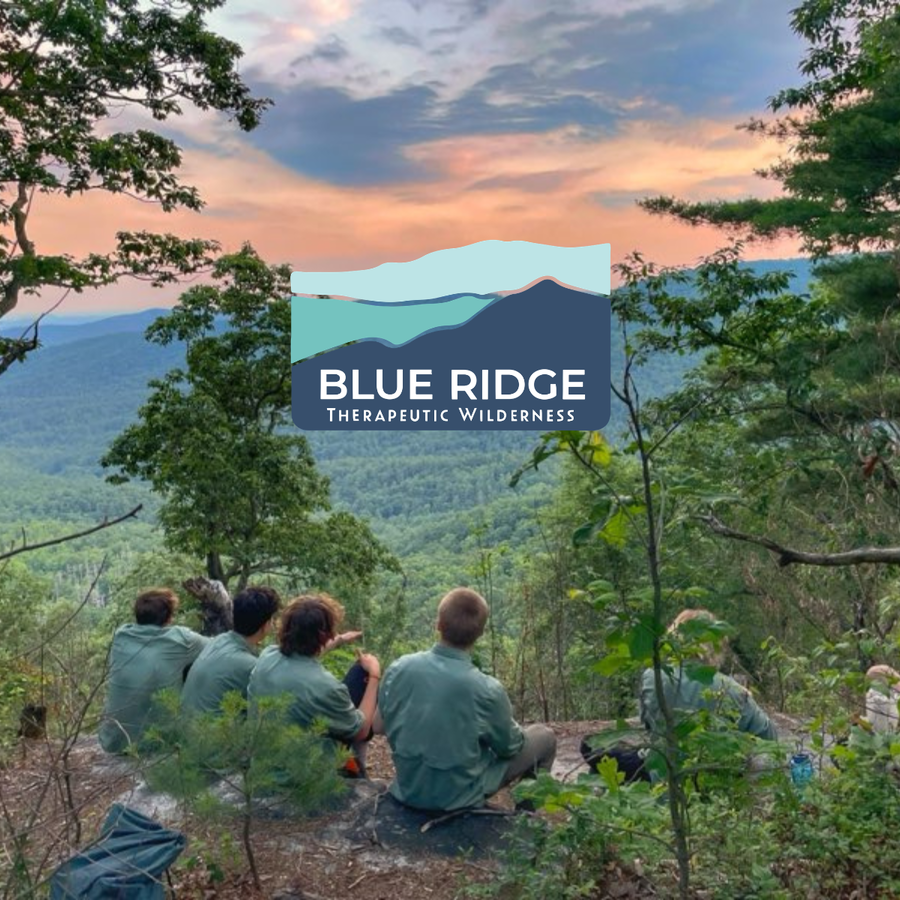
During approximately 16 weeks at Blue Ridge, he participated in an immersive, nature-based therapeutic environment combining clinical work with experiential learning, peer relationships, daily responsibilities, and life outdoors.
For him, stepping outside his familiar environment provided an opportunity to see his behavior and relationships from a different perspective.
“It allowed me to see a new perspective on the way I operate, think, and act,” he said.
He particularly remembers beginning to recognize how his behavior affected the people around him. Through an impact letter and his experiences living within a small group, he developed a greater awareness of his relationships with others.
“I realized that I care more about people than I once thought I did,” he said.
He also began developing skills for identifying and communicating emotions rather than hiding them.
“It gave me the communication skills to express how I’m feeling instead of running away and trying to hide or mask everything I was feeling,” he said.
His parents were engaged in their own therapeutic work throughout the process. His mother describes family support, communication with the treatment team, and the skills they developed during Blue Ridge as tools the family continued using after their son left.
“We carried the knowledge and skills learned at Blue Ridge throughout our mental health journey with our son,” she said.
Following Blue Ridge, he transitioned to residential treatment and continued his therapeutic work. His experience reflects the role Blue Ridge can play within a broader continuum of adolescent mental health care, helping young people and their families interrupt entrenched patterns, develop insight, strengthen engagement in treatment, and better understand what support may be needed next.
One of the most significant concerns parents may have when considering treatment away from home is what it could mean for their relationship with their child. The former student understands that concern firsthand.
“The important thing to remember is that damage isn’t permanent,” he said.
Today, he describes his relationship with his parents as “infinitely better” than it was before treatment.
“I am so grateful that they had the courage to take the step to have me come to Blue Ridge,” he said.
That experience now informs the way he approaches his own work with adolescents.
During his time as a student, one field staff member became particularly important to him. That staff member had also once been a Blue Ridge student.
“He was very instrumental in my recovery here,” he said.
The relationship planted the idea that he might someday return himself.
“I wanted to give back the love and care that I was so freely given,” he said. “Using the experience that I have from being here to help others adds a level of connection and understanding that is difficult to get in other ways.”
Now, he has the opportunity to provide that same connection for current Blue Ridge students.
For his mother, the significance of watching her son return six years later is difficult to overstate.
“He is 21 now, he is healthy and stable, and living out his dream of returning to Blue Ridge,” she said. “We could not be prouder of him or more thankful for the experience Blue Ridge offered to us in the beginning of his journey.”
His advice to parents who recognize that their teenager is struggling but are uncertain about taking the next step is simple:
“Trust your gut,” he said. “I like to say, ‘Nothing changes if nothing changes.'”
About Blue Ridge
Blue Ridge is a nature-based therapeutic program serving adolescents experiencing emotional, behavioral, relational, and mental health challenges. Through individualized clinical care, experiential learning, family involvement, and a structured peer environment, Blue Ridge helps young people and their families better understand the patterns contributing to current struggles and build a foundation for continued growth.
Families, clinicians, and referring professionals interested in learning more about Blue Ridge can contact the admissions team to discuss whether the program may be an appropriate fit for a young person.
—
For the original version of this press release, please visit 24-7PressRelease.com here
Legal Disclaimer: The content on this page is syndicated from independent third-party providers. Kyrion Media makes no warranties or representations regarding the accuracy, completeness, legality, or reliability of the information, including text, images, videos, or licenses. If you are affiliated with this content or have any complaints, copyright concerns, or requests for removal, please contact us at retract@kyrionmedia.com with the specific URL of the content in question. We will review and address valid requests promptly.